

Herb Your Enthusiasm:
Find deep insights into TCM (Traditional Chinese Medicine) with acupoints, diet recommendations, and so much more.
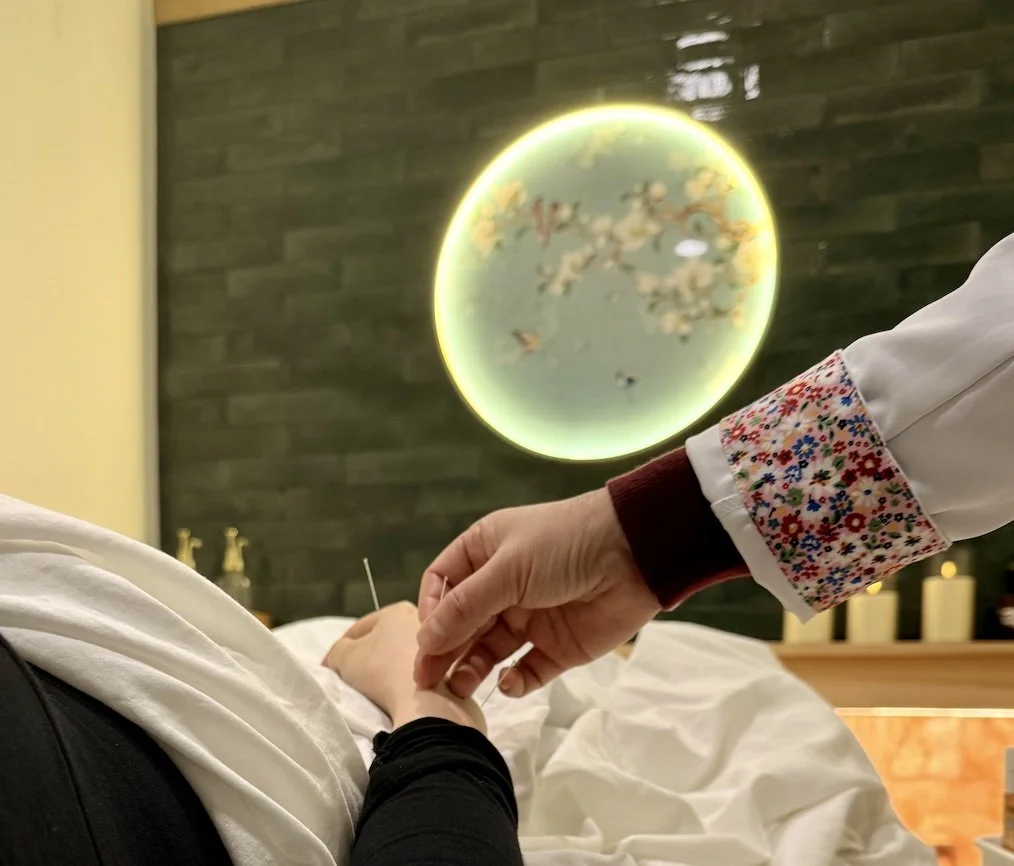
Thinking About Acupuncture? Start Here
At Violet Wellness Spa, our mission is to help as many people as possible regain their health and maintain wellness throughout every stage of life. We use the principles of Traditional Chinese Medicine (TCM) through acupuncture, herbal medicine, home therapies, qi gong, and tai chi to support the body’s natural healing abilities. One of the most common questions we hear is: Does acupuncture really work, and what should I expect during treatment?

Middle Pregnancy What to Expect from a TCM Perspective
In Traditional Chinese Medicine, the second trimester of pregnancy, spanning roughly weeks 13 through 28, is regarded as a uniquely important and stabilizing phase. It is traditionally called “the period when the fetus becomes secure,” reflecting the belief that the embryo has fully anchored in the womb and that the Chong and Ren channels gradually settle into balance.
This stage symbolizes a growing harmony between mother and fetus, yet it also marks a time when the mother’s Qi, Blood, and Kidney Essence are increasingly called upon to support ongoing development. From both a cultural and medical perspective, TCM views this trimester as a period for protecting maternal vitality, establishing a strong foundation for fetal growth, and providing gentle, consistent care rather than aggressive tonification. While early pregnancy symptoms such as morning sickness often subside, new and subtler energetic imbalances may begin to appear.

Shuang Jiang Frost Decent:
Shuang Jiang Frost Descent: Harnessing the Power of Traditional Chinese Medicine (TCM) in Autumn
As the beauty of autumn unfolds with its golden hues and crisp air, the Traditional Chinese Medicine (TCM) calendar points to a significant Solar Day, the "Shuang Jiang" or "Frost's Descent." It marks a period when the first frosts may appear, and nature's energy contracts in preparation for the winter ahead. Just as nature prepares, TCM suggests that the human body must also make adjustments to ensure balance and harmony.

Han Lu (Cold Dew)
Han Lu (Cold Dew) in Traditional Chinese Medicine: A Deep Dive into the Large Intestine, Stomach, and Bladder
In Traditional Chinese Medicine (TCM), the cycles of nature and the changing of seasons have long been acknowledged to influence the state of our health. One particular seasonal node, known as 'Han Lu' or Cold Dew, marks the transition from the milder temperatures of early autumn to the colder onset of late autumn. As the earth prepares for winter's embrace, the dews that form during night become colder. This article will delve into the significance of Han Lu and its implications for three pivotal organs in TCM: the large intestine, stomach, and bladder.